
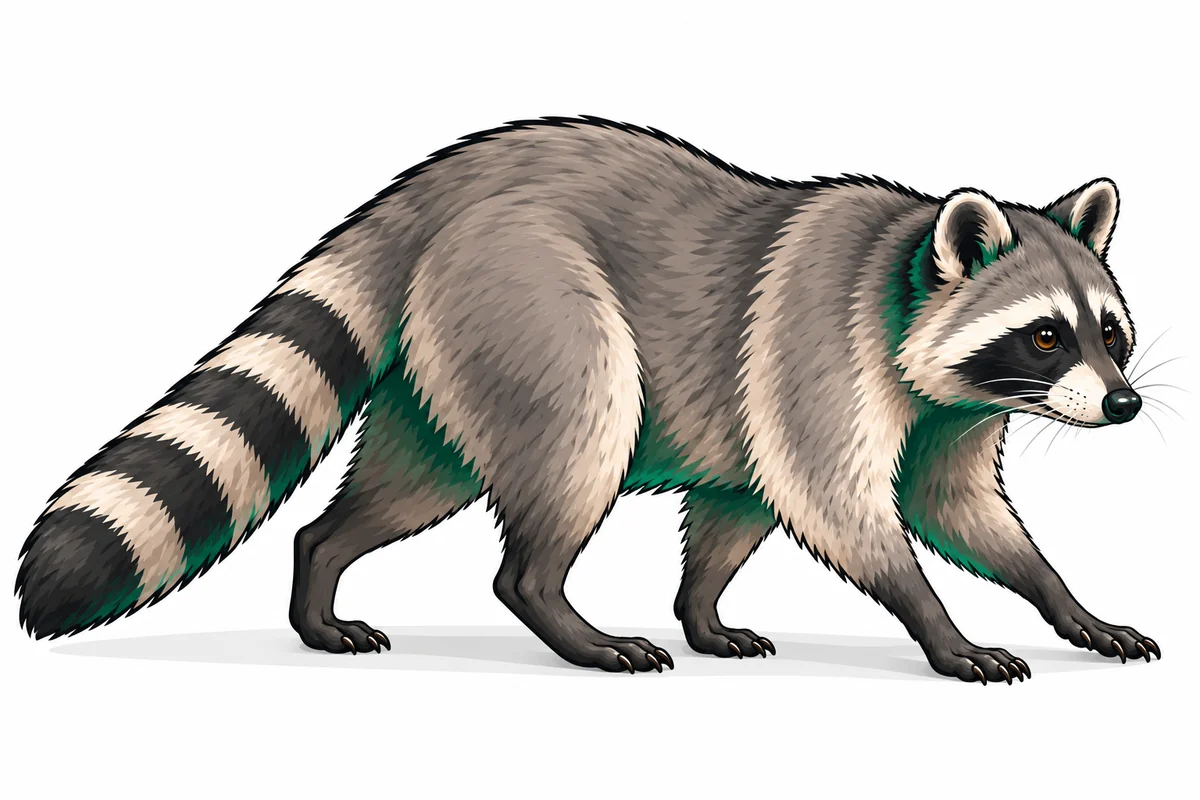
Repeated nighttime visits often mean a raccoon has found accessible food or shelter. Start by looking at what brings the animal back. A backyard visitor and an animal occupying your attic are different problems and need different responses.
Remove the Reasons to Return
Secure garbage lids, bring pet food indoors, collect fallen fruit and review spilled bird seed or accessible feed. These food sources can attract wildlife even when nobody intends to feed it. FWC recommends securing attractants as an important part of preventing conflicts.
Check for Building Activity
From a safe place on the ground, note damaged soffits, vents or roofline openings. Record where you hear movement and whether it seems to be inside the building. Do not close an opening until occupancy has been assessed; animals may remain inside.
Understand the Limits of Deterrents
A motion-activated sprinkler can discourage visits to a particular area. It does not repair an attic entry point or remove a food source. Monitor what changes instead of assuming one device will keep every animal away permanently. Avoid homemade chemical repellents as a substitute for an assessment.
When to Call SWAT
- Heavy movement or repeated noises inside an attic
- Roofline damage or evidence of an animal using a building opening
- Activity that continues after attractants have been secured
- A removal concern requiring equipment, trapping or exclusion
Tell us the property type, where the activity occurs and whether you have photographs. We discuss removal, monitoring and entry-point repair according to the findings. Cleanup or insulation restoration, when needed, has its own scope.
Wildlife methods depend on the species and applicable requirements. A plan should account for animals occupying the space before exclusion work begins.
Further reading: FWC tips for securing wildlife attractants and FWC nuisance wildlife guidance.